LAHORE: The Punjab government has invoked Section 144 of the Code of Criminal Procedure (CrPC) across the Lahore district for a period of 30 days to ensure the upcoming Basant festival is not exploited for ulterior motives. The prohibitory orders aim to preempt the misuse of the cultural assembly for political or sectarian agendas, while also addressing grave security concerns regarding public safety and the maintenance of communal harmony.
The Punjab home department on Monday evening issued a notification under Section 144 of the Code of Criminal Procedure 1898, prohibiting the purchase and use of the image or picture of any person, holy scripture, religious place, flag of any country and political party on kites, to avoid disruption of public order. As per sources, the step was taken following reports that workers and supporters of some political parties had been considering the use of party flags, and pictures of party leaders on the kites.
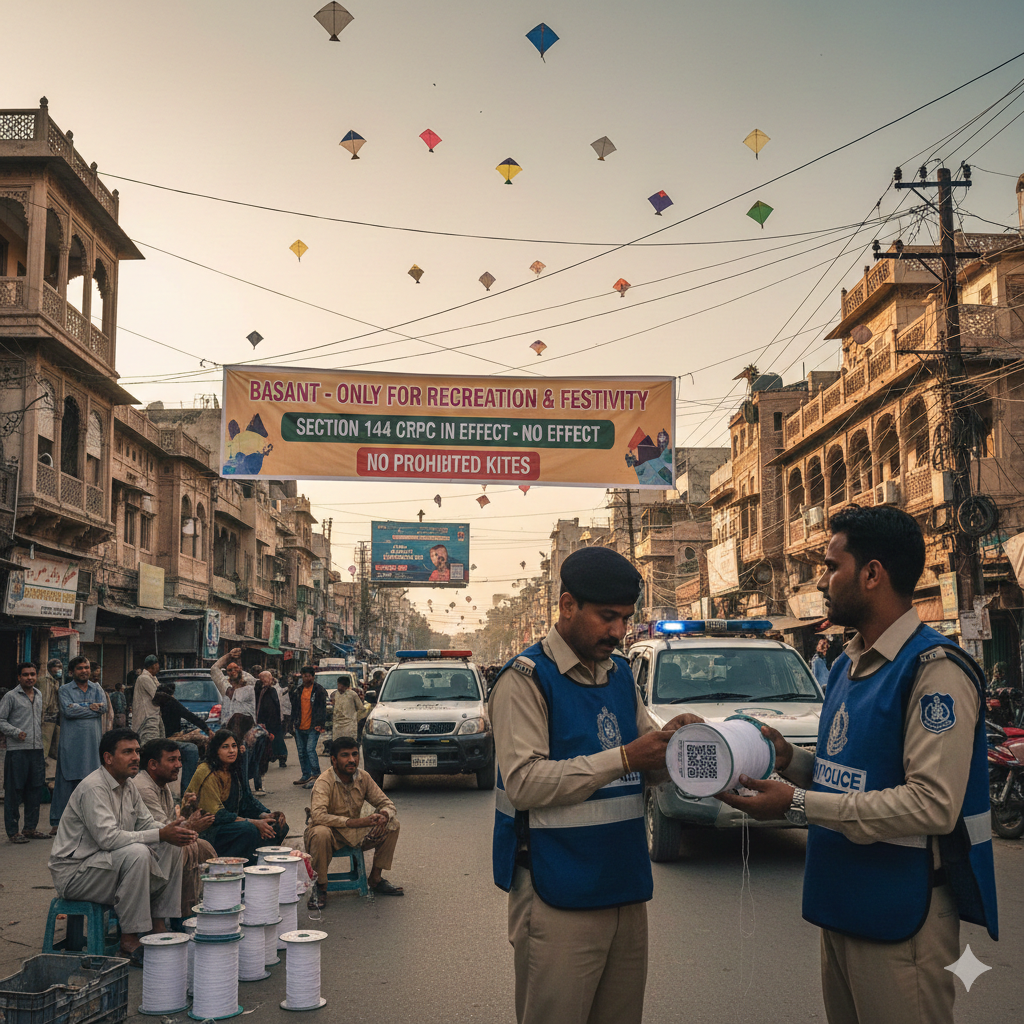
Considering that this could disrupt law and order in Lahore district during Basant days, the provincial government has instructed that “Only plain, uni-coloured or multi-coloured kites (i.e. Gudda or Patang) shall be allowed during kite flying in the district of Lahore from Feb 6 to 8.” The home department order says that the government has allowed kite flying solely for recreation and festivity, but prohibited manufacturing, trade, transport, storage, sale and purchase of kites having pictures of flags and places for 30 days from now onwards.
The Lahore deputy commissioner has completed the process of registration of manufacturers, traders, sellers and kite flying associations, instructing them to prepare, store and sell kites and twine as per the notified protocols. The government has already notified the Punjab Regulation of Kite Flying Rules 2025, prohibiting flying kites with metallic wire, nylon cord or strings coated with glass or other sharp materials. Besides, the manufacturing, transport, storage and sale of kites and hazardous strings have also been banned. The violators could face three to five years imprisonment or a fine of up to Rs2 million, while those manufacturing or selling banned materials may be punished with five to seven years in jail and fines up to Rs5m.
The kite flying rules have also notified specifications of permissible kite flying material that states: a ‘patang’ shall not exceed four-and-a-half ‘githi’ and 35 inches in width and 30 inches in length. A ‘gudda’ shall not exceed one-and-a-half ‘tawas’ and 40 inches in width and 34 inches in length. The ‘Dor’ (twine) will be made of cotton, with not more than nine ‘taars’ (threads), and not less than 28 counts, coated with ‘maanja’ having ‘sheesha’ size of 350 mash and above and wound in the shape of a ‘pinna’ having a specific QR code. Dor wound on a charkhi (spool) is also prohibited.