
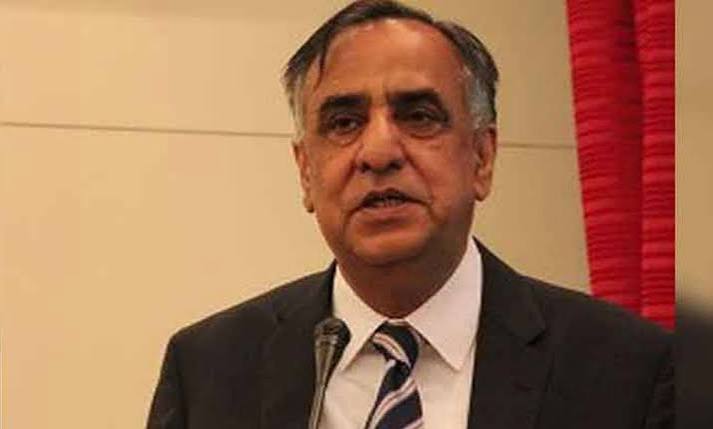
ISLAMABAD: Issuing a landmark order, Federal Tax Ombudsman (FTO) Zafar Hijazi has laid bare deep-rooted systemic vulnerabilities in Pakistan’s corporate incorporation, sales tax registration and digital tax administration systems – loopholes that cybercriminals and fictitious business entities exploited to orchestrate large-scale sales tax fraud.
The investigation, arising from the unauthorised use of a taxpayer’s IRIS account, uncovered fraudulent sales transactions involving hundreds of millions of rupees, carrying tax implications amounting to millions of rupees.
The investigation revealed how fake supplies were introduced into the sales tax returns of an innocent taxpayer through unauthorised access to the IRIS Portal, using VPN-based connections, and routed through multiple beneficiaries to facilitate fraudulent input tax adjustments.
Newly incorporated company emerges as a major beneficiary One of the most significant findings concerns a newly incorporated private limited company which emerged as a major second-tier beneficiary in the fraudulent supply chain.
The company was incorporated with SECP and obtained sales tax registration on consecutive days. The investigation revealed that, despite the nature and scale of the business activities subsequently attributed to the company, its registration process did not ensure meaningful scrutiny of its credentials and supporting documents.
In particular, the company uploaded the same registration profile document in place of essential supporting documents, including a paid utility bill, evidence of ownership or tenancy of business premises and relevant registration particulars.
The automated registration system accepted these attachments without adequate validation. The FTO observed that the relevant provisions of Rule 5 of the Sales Tax Rules, 2006, provide certain checks for individuals, AOPs, single-member companies and manufacturers, but leave a significant gap concerning other corporate entities.
This omission creates an opportunity for unscrupulous elements to exploit automated registration facilities without meaningful verification of their credentials. The investigation further revealed that changes in the company’s directorship were reflected in FBR’s Form 181 records even though the corresponding change in directors and ownership through Form 29 was still pending approval before SECP.
This exposed another serious weakness in the integration and validation of corporate information between SECP and FBR. Of further concern, the same corporate entity had surfaced as a beneficiary in another fake-invoice case involving a different taxpayer for the same tax period.
This recurrence raises serious questions about the effectiveness of existing post-registration scrutiny and risk-monitoring arrangements. Cybercriminals exploited IRIS and VPN technology. The investigation also established that fraudulent sales tax returns for two consecutive tax periods were filed through unauthorised access to the complainant’s IRIS account. The recorded IP addresses were associated with VPN services, showing apparent endpoints in Indonesia and the United Arab Emirates.
The available technical logs could not conclusively establish the identities of the actual perpetrators, highlighting the need to strengthen the technical capabilities of FBR and its Directorate General of Intelligence & Investigation for tracing cyber-enabled tax fraud.
The complainant produced bank statements and reconciliations establishing that no payment had been received against the disputed supplies. The investigation also confirmed that the purported transactions involving the Defence Division and the Health Department, Government of Sindh, were not reflected in their respective procurement or purchase records.
The fraudulent transactions had the effect of consuming substantial carry-forward input tax available in the complainant’s account, exposing an innocent taxpayer to potentially serious tax consequences. FTO orders comprehensive institutional and technological reforms Going beyond the individual grievance, the FTO has issued a series of systemic recommendations to address the vulnerabilities exposed by the investigation.
FBR has been directed to initiate immediate legal proceedings for suspension, blacklisting and recovery against identified beneficiaries of fake/flying invoices under Section 11E of the Sales Tax Act, 1990, in accordance with Sales Tax General Order No. 12 of 2023.
Ensure an in-depth criminal investigation under Section 37A read with Section 2(37) of the Sales Tax Act, 1990, to identify the actual cybercriminals and prosecute all beneficiaries in the supply chain wherever their involvement is established. Conduct a comprehensive fact-finding inquiry into the eligibility, registration and subsequent activities of the newly incorporated company, including responsibility for the failure to scrutinise its registration documents.
Also constitute a committee of relevant FBR authorities to comprehensively review Rule 5 of the Sales Tax Rules, 2006, and recommend amendments covering all categories of persons and companies, with appropriate safeguards against fraudulent registrations.
The order also discloses to introduce a clear 30-day timeframe for mandatory post-registration scrutiny under Sub-rule (6) of Rule 5. Revisit the procedure for modifications through Form 181 to prevent unauthorised or unverified changes in directors and other registration particulars. Introduce quarterly scrutiny of newly registered companies to identify suspicious activities and emerging patterns of tax fraud. Undertake a countrywide study of companies involved in fake/flying invoices during the preceding year to identify common techniques, modus operandi and systemic vulnerabilities.
PRAL has also been directed to design and deploy robust security controls in the IRIS Portal, including multi-factor authentication and biometric verification, supervisory approval for changes in critical taxpayer profile particulars, and automated IP monitoring and validation mechanisms to detect and block suspicious, high-value or anomalous return filings.
The FTO has further directed the concerned Commissioner Inland Revenue to consider reversal of the fraudulent consumption of the complainant’s accumulated carry-forward input tax, subject to confirmation by the Directorate General of Intelligence & Investigation that the complainant was not involved in the fraud.
All concerned authorities have been directed to report compliance within 60 days. Ease of doing business must not become ease of committing tax fraud The FTO observed that facilitation of legitimate businesses through simplified and automated procedures is an important policy objective, but such facilitation must be accompanied by effective verification, risk assessment and post-registration oversight.
The investigation demonstrates that gaps in corporate registration, sales tax registration, digital authentication and inter-agency coordination can be exploited by organised elements to create corporate entities and use them as vehicles for fraudulent invoicing and tax evasion.
The FTO emphasised the need for a coordinated institutional response involving FBR, PRAL and SECP so that corporate registration particulars, changes in directorship, sales tax registration and subsequent business activities are subject to effective verification and monitoring.
This landmark intervention reinforces the FTO’s role not only in providing relief to aggrieved taxpayers but also in identifying systemic maladministration, protecting public revenue and recommending structural reforms to prevent recurrence of tax fraud. The FTO appreciated the assistance extended by the Chief, Sales Tax (Operations), FBR, and officials of SECP during the investigation.