Categories Courts

Govt invokes SC jurisdiction against IHC verdict in audio leak case

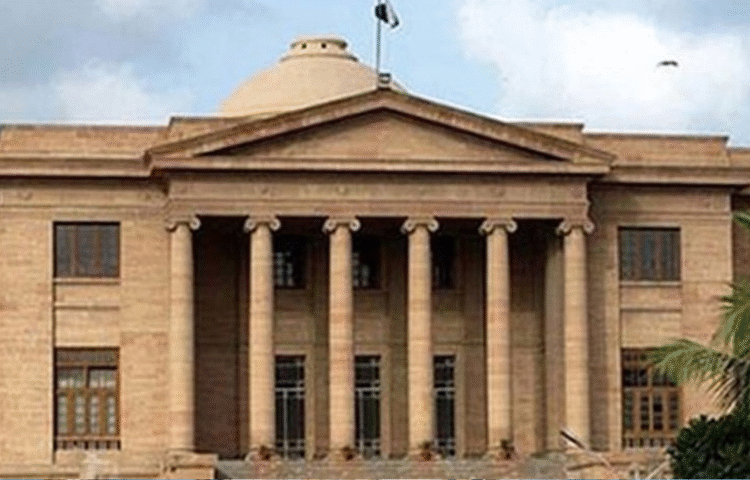
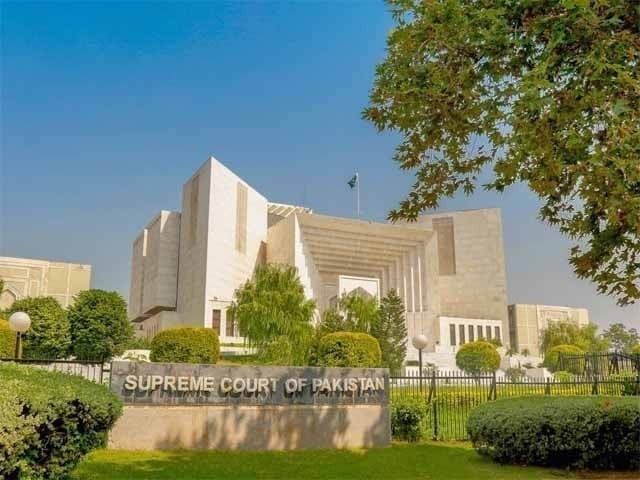
The federal government has challenged the Islamabad High Court’s (IHC) verdict in the alleged audio leak case involving Bushra Bibi and the son of former Chief Justice Saqib Nisar in the Supreme Court (SC), a private television reported on Friday.

Making former Chief Justice’s son, PTA, Ministry of Defense, and others as respondents in the matter the appeal has been filed before the top court.

Opposing the IHC verdict, the government made a point saying the IHC’s decision is contrary to facts and that the high court had granted relief that was not even requested. It has also been stated in the appeal that the IHC has no authority to take suo motu notice under Article 199, hereby the high court’s decision should be declared null and void.

The federal government stated that when an alleged audio leak involving the distribution of tickets surfaced, the National Assembly Speaker took notice and formed a committee. The former Chief Justice’s son had also challenged the committee’s summons in the IHC.  The government argues that the IHC’s demand for reports from institutions is an overstepping of its authority and that the high court cannot conduct fact-finding.

Earlier, the IHC declared that ‘any form of surveillance’ on citizens was illegal and unconstitutional, asking Prime Minister (PM) Shehbaz Sharif to explain who is ‘responsible for the mass surveillance.
IHC Justice Babar Sattar issued a written order on the plea of Bushra Bibi, wife of Pakistan Tehreek-e-Insaf (PTI) founder Imran Khan, and Najamus Saqib, son of former chief justice Saqib Nisar, against the audio leaks.

In the written order, Justice Sattar said that the federal government was responsible for the surveillance of four million citizens and PM Shehbaz and cabinet members are “collectively and individually” responsible for the mass surveillance.

The IHC also ordered the Prime Minister to submit a report on the legal framework of the surveillance system within six weeks. The report must also clarify whether the surveillance is being carried out in accordance with the law and the constitution.

It also directed the Prime Minister to explain who is responsible for the installation of the surveillance system and mass surveillance and “who is in charge of the system that is affecting the privacy of citizens”.
Meanwhile, the IHC also issued contempt of court notice to Pakistan Telecommunication Authority (PTA) Chairman and its members, directing them to submit response within six weeks. “The court is of the view that the PTA apparently misinterpreted the surveillance system in the report”, it added.

Author

Khudayar Mohla, Managing Partner Mohla & Mohla, Founder of the Law Today Pakistan,

Managing Partner at Mohla & Mohla - Advocates and Legal Consultants, Islamabad, Founder of The Law Today Pakistan (TLTP) Newswire Service. Former President Press Association of Supreme Court of Pakistan with over two decades of coverage of defining judicial moments - including the dissolution and restoration of Chief Justice Iftikhar Muhammad Chaudhry, Asif Ali Zardari NAB cases, Syed Yousaf Raza Gillani contempt proceedings, Panama Papers case against Mian Nawaz Sharif, matters involving Imran Khan, and the high treason trial of former Army Chief and President Pervez Musharraf. He now practises law and teaches Jurisprudence, International Law, Civil and Criminal Law. Can be reached at: mohla@lawtoday.com.pk

More From Author

Leave a Reply

Your email address will not be published. Required fields are marked *

You May Also Like

Lahore High Court, Justice Jawad Hassan, Christian Divorce Act 1869, Pakistan legal news, Shahroz Masih case, minority rights Pakistan, judicial separation Christian law, dissolution of marriage grounds, Section 22 desertion, Section 11 adultery co-respondent, Article 199 writ petition, Article 10-A fair trial, Article 20 religious freedom, Article 4 due process, Mianwali court verdict, substantial justice vs technicalities, irretrievable breakdown of marriage, Punjab Judicial Academy workshops, district judiciary sensitization, matrimonial relief for Christians, evidentiary rigor in divorce cases, legal journalism Pakistan., Khudayar Mohla

LHC Quashes Lower Court Orders on Christian Divorce, Remands the Matter for Re-Adjudication

RAWALPINDI: Justice Jawad Hassan of the Lahore High Court, Rawalpindi Bench, sets aside concurrent findings…

Khudayar Mohla,Supreme Court of Pakistan, witness box seating, witness dignity Pakistan courts, Article 14 Constitution Pakistan dignity of man, fair trial Article 10A Pakistan, witness protection laws Pakistan, courtroom reforms Pakistan judiciary, Qanun e Shahadat witness examination, Supreme Court directives judiciary Pakistan, witness rights Pakistan courts

SC Directs Courts Nationwide to Provide Seating for Witnesses During Testimony

ISLAMABAD: Emphasizing that justice must be administered with humanity and respect for individual dignity, the…

Khudayar Mohla,Islamabad High Court, IHC, Justice Mohsin Akhtar Kayani, Dr. Zeeshan Ashraf, IVY School of Law, IVY College of Management Sciences, Amicus Curiae, Haq Mehr, Dower Rights, Islamic Jurisprudence, Shariah Law, Limitation Act 1908, Article 104 Limitation Act, Article 227 Constitution of Pakistan, Women's Financial Rights, Widow Inheritance, West Pakistan Family Courts Act 1964, Surah An-Nisa, Law and Justice Commission of Pakistan, National Commission on the Status of Women, Matrimonial Financial Disputes, Pakistan Legal News, Legislative Reform.

IVY School of Law HoD’s Dr. Zeeshan Ashraf Convinces IHC to Overturn Dower Time-Bar

ISLAMABAD: In a precedent-setting 21-page judgment aimed at harmonizing statutory law with Islamic injunctions, the…