

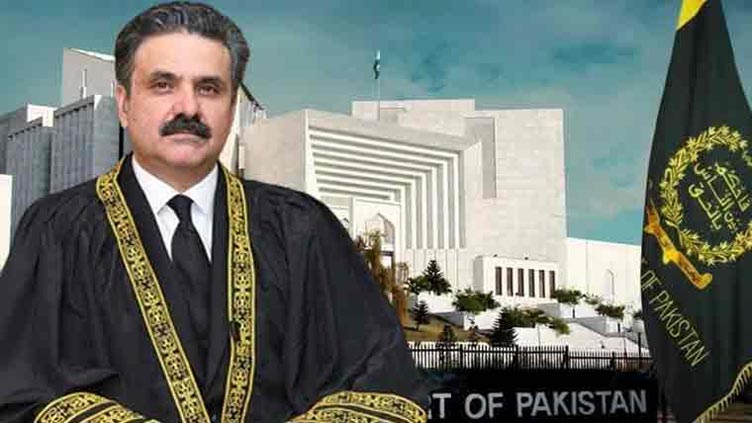
Chief Justice of Pakistan Justice Yahya Afridi has decided to convene meeting of Judicial Commission of Pakistan on April 8 to appoint two new Supreme Court judges from among five nominations received from the Lahore High Court.
According to agenda of the meeting, two new SC judges will be picked from among the five senior most LHC judges. The JCP will also consider the request of the LHC senior puisne judge—Shujaat Ali Khan—for expunction of remarks/observations contained in the minutes of meeting of the JCP held on July 2, 2024.
During that meeting, the JCP had unanimously approved the nomination of Justice Aalia Neelum as the new LHC chief justice by ignoring two senior judges—Justice Shujaat Ali Khan and Justice Ali Baqar Najafi. The JCP had noted that the judges were not suitable and fit to hold the office of the LHC chief justice “largely due to the negative public perception as to their integrity and reputation amongst the judicial and legal fraternity”.
It said in a full and frank discussion, all the members of the commission either stated or endorsed the view that “there was a near universal convergence of negative perception then any expectancy stood displaced, and the candidature of the nominee ought not to move forward”.
The JCP minutes stated that the foundational strength of a judicial institution is public trust. “All members of the commission were of the view that the person who is to be appointed as the chief justice of a high court must possess unchallenged integrity and unblemished reputation.”
Justice Munib Akhtar, a member of the JCP, had noted that the Al-Jehad Trust case had laid down a substantive rule of constitutional law and was a binding precedent. However, the legitimate expectancy though creating a high threshold could be displaced, if there were convincing reasons to the contrary. Justice Yahya Afridi had pointed out that the two senior most LHC judges were not considered fit for elevation to the Supreme Court of Pakistan in the earlier meeting of the JCP dated June 7; hence they should not now be considered for appointment as the LHC chief justice.