
ISLAMABAD: Nearly eight decades after Alexander Fleming’s discovery of penicillin transformed modern medicine, the world is confronting the very danger he foresaw: bacteria evolving resistance to the drugs designed to kill them. A recent feature published by the Nobel Prize organisation traces this unfolding crisis, from Fleming’s own warnings to the scientific expeditions now underway to find humanity’s next line of defence.
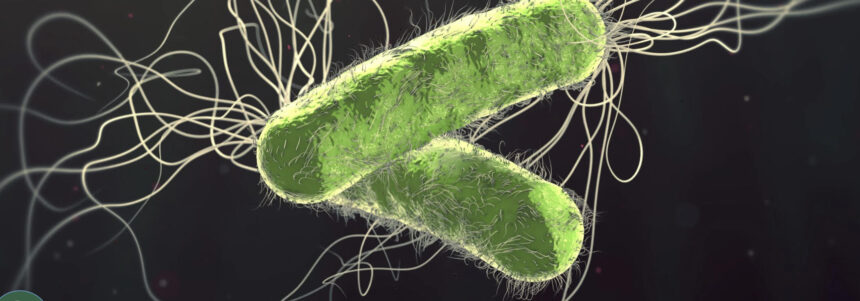
Antimicrobial resistance is described as a global health crisis, with projections suggesting that drug-resistant infections could claim 10 million lives annually by 2050. According to the feature, antibiotic-resistant bacteria already cause roughly five million deaths worldwide each year, underscoring the urgency behind the renewed global search for new antibiotic compounds.
The feature revisits Fleming’s landmark 1928 discovery, when he found that a mould accidentally contaminating a staphylococcus culture plate had created a bacteria-free zone around itself — the observation that led him to identify and name penicillin. Kevin Brown, archivist and curator at the Alexander Fleming Laboratory Museum in London, described Fleming’s genius as his ability to notice something others might have overlooked and to apply scientific reasoning to understand what it meant.
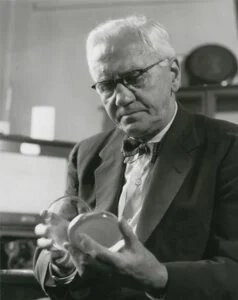
Though penicillin initially struggled to gain traction due to its instability, Oxford scientists Ernst Boris Chain and Howard Florey succeeded in producing a pure form of the drug during the Second World War, enabling its use in treating wound infections, pneumonia and other bacterial diseases among wounded soldiers. By 1945, Fleming, Chain and Florey jointly received the Nobel Prize in Physiology or Medicine — yet in his acceptance lecture that same year, Fleming cautioned that bacteria could develop resistance if antibiotics were administered at insufficient doses. That warning has proven prescient.
The feature notes that since the 1980s no entirely new classes of antibiotics have reached the market, with scientific, financial and knowledge-related hurdles slowing the development pipeline even as resistance levels continue to climb. This stagnation has pushed researchers toward unconventional hunting grounds. Chilean microbiologist Cristina Dorador, for instance, collects soil samples from the salt flats of the Atacama Desert, one of the planet’s most extreme environments, in search of microorganisms capable of producing novel antibacterial compounds.
Researchers elsewhere are exploring equally unexpected sources — from ocean beds to leafcutter ant colonies to the human body itself — while genome mining offers another avenue for identifying candidate molecules. A study published in Nature in March 2025 reported the discovery of a promising new molecule, capable of killing drug-resistant bacteria, in a soil sample taken from a backyard in Ontario, Canada, illustrating how even ordinary environments may hold untapped potential.
The World Health Organization adopted its global action plan on antimicrobial resistance in 2015, and the Nobel feature notes that universities, pharmaceutical companies and international bodies continue to collaborate on the issue. Reflecting on Fleming’s legacy, Brown suggested the scientist would likely have welcomed today’s renewed efforts, having anticipated the very crisis the world now faces.