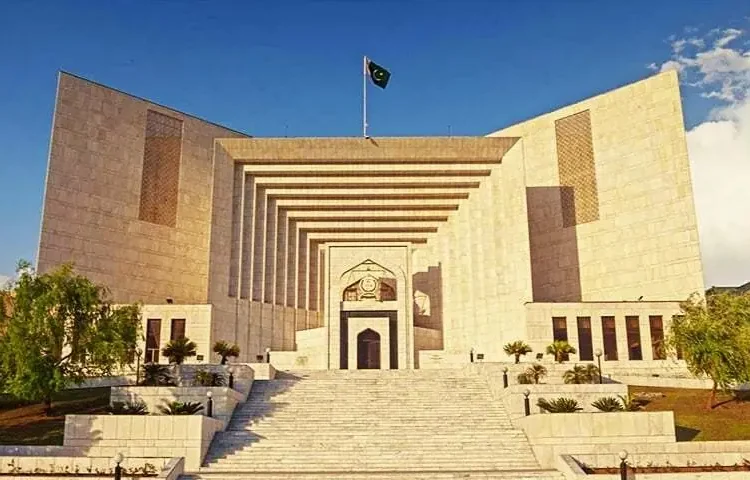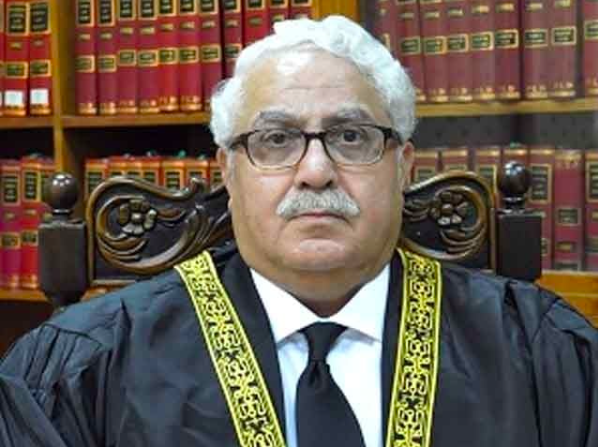
A day after the top court declined to accept plea of Supreme Court Justice Mazahar Ali Akbar Naqvi to stay ongoing misconduct proceedings against him before Supreme Judicial Council, he tendered resignation saying it was no longer possible to continue to serve for the slot of apex court judge.
Naqvi had been facing charges of misconduct and was embroiled in ongoing proceedings at the Supreme Judicial Council (SJC) in this regard. Tendering his resignation to President Dr. Arif Alvi the judge expressed it was an honour for him to serve as the judge of the Lahore High Court and then the Supreme Court of Pakistan.
“In the circumstances which are a matter of public knowledge and to some extent public record, it is no longer possible for me to continue to serve as a judge of the Supreme Court of Pakistan,” said Naqvi in his resignation. “Considerations of due process also compel. I, therefore, effective today resign as judge of the Supreme Court of Pakistan.”
A three-member bench led by Justice Aminuddin Khan and comprising Justice Jamal Khan Mandokhail and Justice Musarrat Hilali was hearing Justice Naqvi’s petition. During the proceedings, Justice Mandokhail noted that Naqvi, in his constitutional petition, contended that the complaints lodged against him at the SJC were based on mala fide intentions.
At the last hearing of the case on Monday, the court expressed wonder that Justice Naqvi had not arrayed the complainants as respondents. Naqvi’s counsel Makhdoom Ali Khan referred to Justice Qazi Faez Isa case, in which, according to him, the complainants were not named as respondents.
Justice Aminuddin Khan, however, took exception to this claim, stating that Justice Isa had named the complainants including the Assets Recovery Unit as respondents. Makhdoom Ali Khan said that when the SJC decided to issue the first show cause to Naqvi on October 27, it had dismissed 21 other complaints filed against other judges without hearing those petitioners.
“If the complainants in Justice Naqvi’s case are named as respondents then all the people whose complaints were rejected without giving them a hearing will file petitions against the move under Article 184 (3),” Khan argued.
Justice Aminuddin Khan observed that the Supreme Court is now adjudicating the matter. “The court believes that the complainants should be first issued notices. Otherwise, the proceedings cannot move forward,” he said.
The lawyer argued that if the court opened its doors to the complainants in this case then a lot of people will rush to the top court with complaints against judges. Justice Aminuddin Khan emphasized that it is the judges, not the complainants, who have approached this court. “The court might have proceeded further had the complainants not been mentioned in your petition.”
Justice Mandokhail said the court’s position is that it cannot make a decision without hearing the complainants, adding that justice should not only be done but also seen to be done. “We do not want to give everyone a free pass to point the finger at judges. Either the complaint in the council should be so substantial and comprehensive that no judge can escape it, or the council should take strict action against baseless complaints.
“There should be no middle ground. There is a lot of money in lawyering; people become judges due to the respect associated with the position,” he said. The court later asked Justice Naqvi to file an amended plea, making complainants as respondents. When the lawyer for Naqvi requested the bench to stay the proceedings of the SJC, Justice Aminuddin replied that they had not heard the merits of the case so far.