

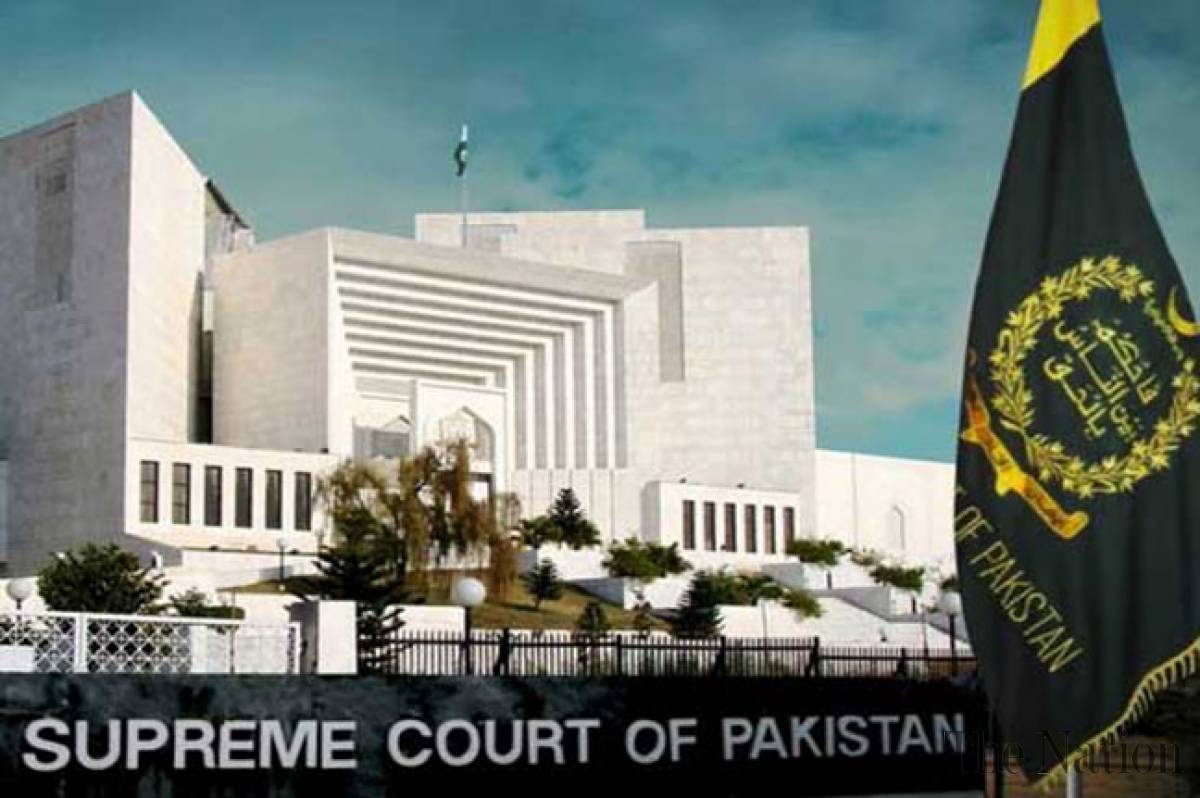
While accepting review petition of the Central Bank of Pakistan the top court ruled that at least 3-member bench of the apex court can modify, alter or amend a verdict of divisional bench of a High Court.
Authoring a 5-page judgment, Justice Muhammad Ali Mazhar of the Supreme Court noted, “With all humility to our command, we agree that the two Member Bench, taking into consideration the assiduousness and exactitudes of Order XI of the Supreme Court Rules, 1980, could grant leave or dismiss the civil petition for leave to appeal, but could not modify, alter or amend the judgment of Divisional Bench of High Court for which the matter should have been fixed before a three Member Bench as per the aforesaid Rules,”.
A 3-member bench of the Supreme Court led by Justice Sardar Tariq Masood said that the command and dominance of Order XI of the Supreme Court Rules, 1980, is germane to the constitution of benches which unequivocally expounds and enlightens that every cause, appeal or matter shall be heard and disposed of by a bench consisting of not less than three judges to be nominated by the chief justice.
In the verdict, it has been stated that all petitions for leave to appeal, appeals from appellate and revisional judgments, and orders made by a single judge in the high court, and appeals from judgments/orders of the service tribunals or administrative courts, and appeals involving grant of bail/cancellation of bail may be heard and disposed of by a bench of two judges, adding that the chief justice may, in a fit case, refer any cause or appeal as aforesaid to a larger bench.
The court noted that in the instant case, the bench was inclined to grant leave to appeal to a limited extent vis-à-vis the rate of mark-up, adding that it was also a “ground reality” that no leave to appeal was granted by this court against the judgment of the high court.
“It is evident from the order of this court that on the sole statement of the counsel for the respondent No1, the alleged excessive rate of markup was simultaneously modified in the judgment without recording any consensual statement of the petitioner’s counsel.”
“Lucidly translucent without any shadow of doubt that while modifying the judgment of the high court, no leave to appeal was granted by this court, rather the judgment conspicuously reflects that this Court was inclined to grant leave to appeal only for the reason that the rate of 10 percent markup per annum on the value of dollar seemed to be excessive, but on the request of learned counsel for the respondent No. 1, that his client was willing to accept any reduced rate of mark-up, the judgment of the High Court was modified while rebuffing the plea of limitation”, stated in the verdict.
Renowned lawyer Faisal Siddiqui filed the review petition on behalf of the State Bank of Pakistan which the top court allowed and restored main petition. The restored plea shall be fixed for hearing before a three member-bench for leave to appeal.