
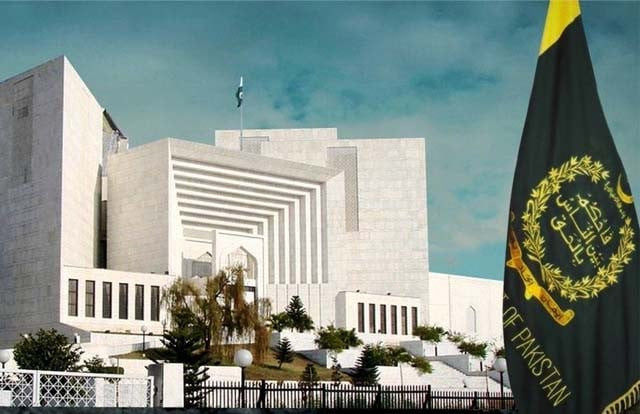
ISLAMABAD: A tribunal that hears the service appeals of Punjab’s civil servants cannot reopen its own final judgments, the Supreme Court has ruled, holding that the power of review exists only where a statute expressly grants it.
A two-member bench of Justice Muhammad Ali Mazhar and Justice Musarrat Hilali held that the Punjab Service Tribunal (PST) has no authority under the Punjab Service Tribunals Act, 1974 to review its decisions. The judgment, authored by Justice Mazhar, was announced on July 22, 2026.
The court converted the petition filed by the Inspector General of Police, Punjab, into an appeal and allowed it. It set aside the PST’s order of May 14, 2024, which had accepted a review application and reinstated a dismissed police official, Alamdar Hussain.
Reinstatement left untouched
The court was explicit that its ruling does not disturb the reinstatement itself. The Additional Advocate General told the bench the department had no objection to the respondent remaining in service, because another employee facing similar charges, identified only as Saleem, had already been reinstated. The department asked the court to decide only the legal question so that it would not set a precedent. The bench recorded that undertaking and said its judgment is without prejudice to the reinstatement, to avoid discrimination between the two employees.
How the case arose
According to the judgment, the respondent was charged in May 2021 and, after a regular inquiry under the Punjab Police (Efficiency & Discipline) Rules, 1975, was dismissed from service. The PST dismissed his appeal. Instead of approaching the Supreme Court, he sought a rehearing and then filed a review application in March 2023. The PST allowed it, reasoning that Section 5 of the Act, which gives it the powers of a civil court, also allowed it to review its own orders.
Review is a creature of statute
The Supreme Court rejected that reasoning. It held that Section 5 gives the tribunal civil court powers only for the purpose of deciding an appeal, namely enforcing attendance, compelling production of documents and issuing commissions. Those powers, it said, cannot be stretched into a power of review, which is a separate and substantive right that must be conferred by law.
The bench relied on earlier Supreme Court decisions, including Hussain Bakhsh, Muzaffar Ali v. Muhammad Shafi and S.A. Rizvi v. Pakistan Atomic Energy Commission. It also cited Indian Supreme Court rulings and the doctrine of functus officio, under which a tribunal that has decided a matter cannot reopen its substance. An order of review passed without statutory power is coram non judice, meaning void for want of jurisdiction, the court said.
The only permitted correction is under Rule 22 of the Punjab Service Tribunals (Procedure) Rules, 1975, which allows fixing clerical or arithmetical mistakes caused by an accidental slip or omission. The court likened this to Section 152 of the Code of Civil Procedure and said it is distinct from review.
Punjab and Sindh differ from other tribunals
The bench noted that statutory review powers exist for the Federal Service Tribunal under Section 4A of the Service Tribunals Act, 1973, in Khyber Pakhtunkhwa under Section 7A of its 1974 Act, and in Balochistan under Section 5A of its 1974 Act. The Punjab Service Tribunals Act, 1974 and the Sindh Service Tribunals Act, 1973 contain no such provision. The court had recently examined this landscape in Mst. Zubaida Khatoon v. Government of Khyber Pakhtunkhwa (2026 SCP 24).
What it means
The ruling confirms that PST decisions are final at the tribunal level. An aggrieved civil servant in Punjab cannot seek review before the tribunal and must instead approach the Supreme Court. Any review order the tribunal has passed without statutory backing is open to challenge as void.