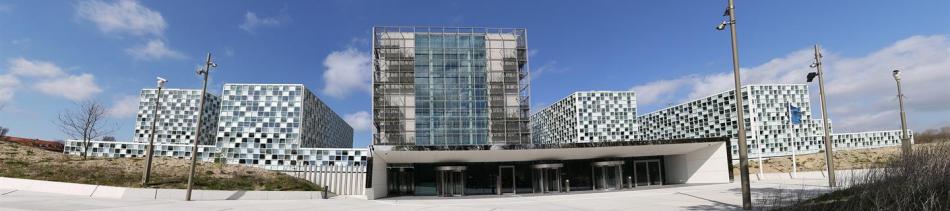
Granting stay order in response to plea of two law professors, Federal District Court for the Southern District of New York issued directives to Trump administration from pursing penalties against international law experts Mr. Rona and Ms. Davis.
The New York Times reported a federal judge on Wednesday permanently barred the Trump administration from imposing penalties on two law professors over their involvement with the International Criminal Court, finding that the threat violated their First Amendment rights.
In a 22-page opinion, Judge Jesse M. Furman of the Federal District Court for the Southern District of New York concluded that the president had used the threat of legal penalties to force Gabor Rona and Lisa Davis, both law professors in New York, to abandon their association with the International Court in The Hague, which prosecutes cases of genocide, war crimes and crimes against humanity. The judge definitively barred the government from taking any action to follow through on the threat.
Mr. Rona and Ms. Davis had each advised the I.C.C.’s chief prosecutor, Karim Khan, or supported his office’s work through its investigations and prosecutions, and have written and spoken extensively about international law.
- mostbet casino
- mostbet casino
- pinap
- 1 win
- 4rabet pakistan
- mostbet az
- 1 win
- pinup az
- mosbet casino
- mostbet казино
- 1win yüklə
- mostbet casino
- 1win
- mostbet
- mostbet casino
- 1win
- mostbet casino
- lucky jet crash
- aviator game
- aviator casino
- pinup
- 1 win bet
- pinco
- 1 win bet
- pinco
- pinup az
- pin up uz
- mostbet az
- 4a bet
- mosbet
- pin up uz
- pin up
- snai casino it
The United States is not among the 125 countries that are party to the Rome Statute, which created the International Criminal Court, but has supported a number of its investigations, including in cases involving Ukraine, Sudan and Myanmar.
Under an executive order President Trump signed in February, the professors faced the possibility of criminal and civil penalties because of their association with the court. The I.C.C. has investigated the United States and Israel, and last year issued arrest warrants for Prime Minister Benjamin Netanyahu of Israel and his former defense minister related to their handling of the war in Gaza.
Mr. Trump’s order carried the possibility of jail terms of up to 20 years for anyone supporting the International Criminal Court in its work.
Judge Furman’s ruling mirrored the conclusions of another judge during President Trump’s first term, who found in January 2021 that a similar executive order Mr. Trump had signed likely forced Mr. Rona and three other professors to abandon or reconsider speech and legal advocacy out of fear that the order could be enforced against them.
At the time, Judge Katherine Polk Failla of the Federal District Court for the for the Southern District of New York found that the group, who had mounted a legal challenge, were likely to succeed.
Upon taking office, former President Joseph R. Biden Jr. rescinded Mr. Trump’s original order, but when Mr. Trump returned to office this year, he revived much of its substance — and some identical language — in the order he signed in February. The order cited presidential powers under the International Economic Emergency Powers Act — the same act he has used to justify many tariffs — and accused the I.C.C. of abusing its power.