
Day ago in a historic move, Pakistan has ratified three International Labour Organization (ILO) instruments that will improve workers’ rights and protections as well as help empower evidence-based policy formulation to drive decent work.
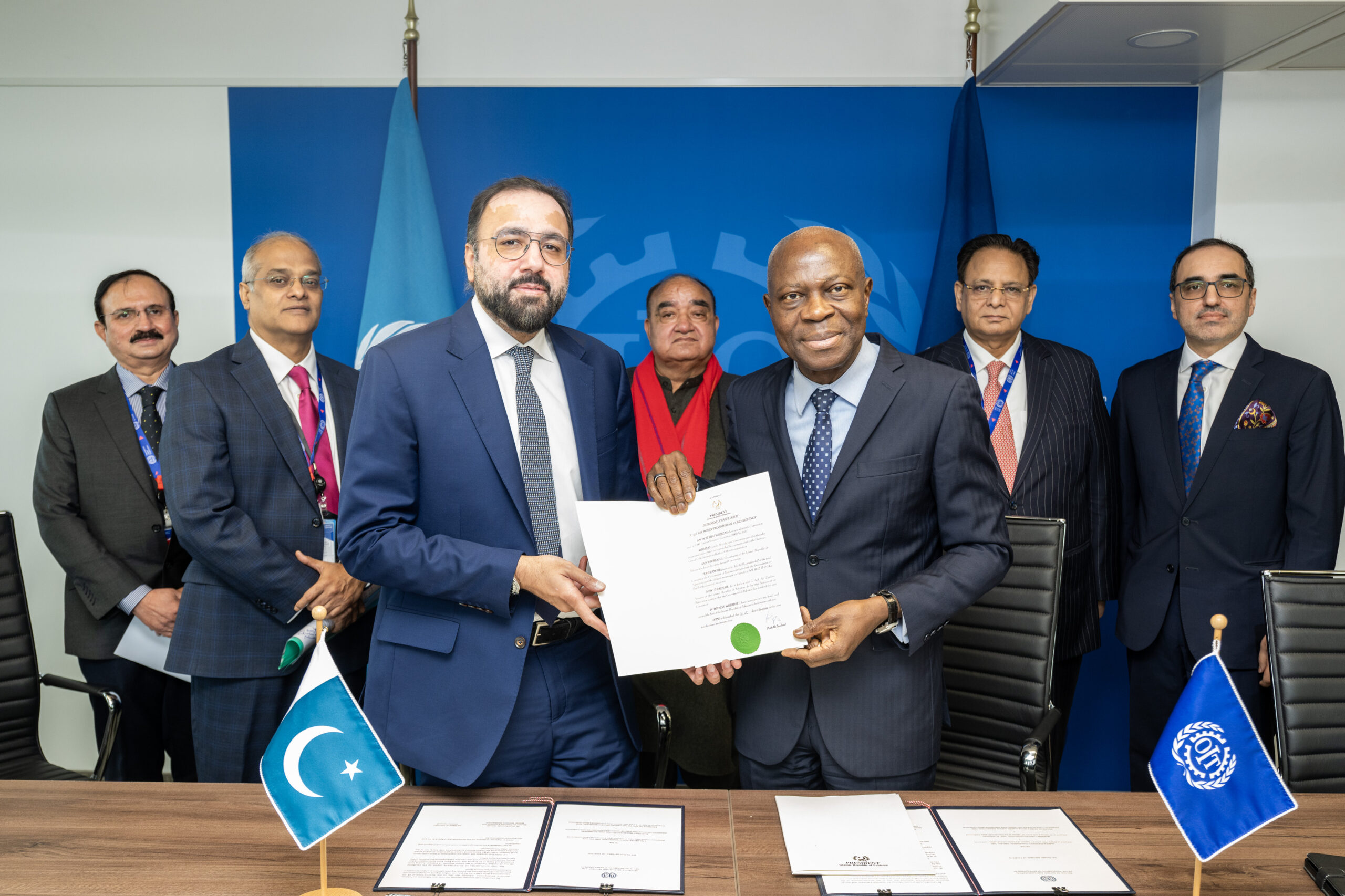
Instruments of ratification for the Protocol of 2014 to the Forced Labour Convention, 1930; the Maritime Labour Convention, as amended (MLC, 2006); and the Labour Statistics Convention, 1985 (No. 160) were handed over by Minister of Overseas Pakistanis and Human Resource Development, Chaudhry Salik Hussain to Gilbert F. Houngbo, the ILO Director-General, on 13 March 2025, during the 353rd session of the ILO Governing Body in Geneva.
The Protocol of 2014 to the Forced Labour Convention, 1930 supplements the Forced Labour Convention which Pakistan ratified in 1957, and gives new impetus to the global fight against all forms of forced labour, including trafficking in persons and slavery-like practices. The ratification of the Protocol affirms Pakistan’s commitment to eradicating forced labour, aligning its efforts with human rights principles and the Sustainable Development Goal 8 on decent work.
The ratification of the MLC, 2006 is a major step towards aligning the country with international maritime standards and ensuring protection not only for national seafarers but also for all those entering the ports of Pakistan. The Convention establishes the rights of seafarers to fair and safe living and working conditions and ensures a level playing field for ship owners. It covers areas like minimum age, employment agreements, hours of work, wages, paid leave, repatriation, on-board and onshore medical care and complaint procedures.
With the ratification of the Labour Statistics Convention, 1985 (No. 160) Pakistan pledges to strengthen its labour data and information infrastructure by enhancing the analytical capabilities of national statistics offices in labour market indicators. This approach will empower evidence-based policy formulation and assist Pakistan achieve its goals and commitments towards creating decent jobs, reducing disparities and enabling vulnerable groups to access safe and inclusive workplaces.
Commenting on the three ratifications, Minister Chaudhry Salik Hussain said, “Pakistan is committed to eradicating forced labour, protecting the rights of seafarers and strengthening the quality of our labour market data. The decision to ratify the three labour standards was arrived at through rigorous consultations amongst the tripartite constituents.
This decision underscores the tripartite constituents’ support for labour rights and their dedication to establish a fair and equitable work environment.”
Geir Tonstol, Director of ILO’s Country Office for Pakistan, highlighted the significance of the ratifications calling them, “historic”. “It is noteworthy that this marks Pakistan’s first ratification of an ILO international labour standard since the Minimum Age Convention was ratified in July 2006. It exemplifies Pakistan’s renewed dedication to global labour standards and the protection of workers’ rights.
The ILO stands ready to support Pakistan in translating these commitments into concrete actions that benefit both workers and employers,” he said.